Received the National First Prize at the National Finals of the 9th National College Student Embedded Chip and System Design Competition.
Research Focus
I am researching
I build research prototypes around AI safety, LLM agents, embodied intelligence, software security analysis, and reliable multimodal systems.
Profile
About Me
I am an undergraduate student in Computer Science and Technology (Class of 2023) at the University of Shanghai for Science and Technology (USST). I am currently a research intern at the Institute of Trustworthy Embodied Artificial Intelligence (TEAI), Fudan University, where I work on AI agents, AI safety, and embodied intelligence. Feel free to contact me~
Contact and Representative Links
Open to academic discussion and collaboration
Please feel free to reach out by email for academic discussion, research collaboration, open-source projects, or learning exchange.
Email 2657751462@qq.com GitHub https://github.com/Kirito14IT Google Scholar Academic publications and citations XSafeClaw https://github.com/XSafeAI/XSafeClaw
Academic Profile: Google Scholar
Google Scholar Profile Representative Open-Source Work: XSafeClaw https://github.com/XSafeAI/XSafeClaw Representative Research: SafeCodeRL https://kirito14it.github.io/projects/safecoderl/ Representative Research: SFMambaNet https://kirito14it.github.io/projects/sfmambanet/ Recent updates
News
Submitted ScamWeb: A Multimodal Benchmark for Grounded Understanding of Cyber-enabled Fraud Webpages to AAAI 2027 after completing research on multimodal data curation, grounded annotation, benchmark design, and training-free fraud understanding.
Joined Advisor Jingfeng Zhang's RISE-AI Lab as a visiting student at TEAI, Fudan University and began ICLR 2027-targeted research on a benchmark for persistent-memory poisoning in agents. The work adopts a victim-centered perspective to design evaluation cases and examines who ultimately bears the loss after an agent is compromised.
Began serving as a reviewer for NeurIPS 2026, contributing to the peer-review process for research in machine learning and artificial intelligence.
At TEAI, Fudan University, under the guidance of Advisor Xingjun Ma, I participated in an enterprise-oriented multi-agent secure collaboration project, contributing to requirements analysis, system design, implementation, and testing.
Completed an International Organization Internship through the UNDP-administered UNV platform on mangrove responses to climate change and produced a review manuscript on blue carbon mitigation.
Joined TEAI, Fudan University and, under the guidance of Advisor Xingjun Ma, worked on the XSafeClaw agent safety project, focusing on runtime integration, controlled tool calls, and safety audit workflows.
Started SafeCodeRL, a multi-agent reinforcement learning framework for safety-constrained LLM code generation.
Worked on VulnSeeker at the Fudan Software Engineering (CodeWisdom) Lab, combining CodeQL static analysis with LLM-based security judgement.
Joined the Fujian Key Laboratory of Network Computing and Intelligent Information Processing at Fuzhou University and, under the guidance of Advisor Yizhang Liu, began SFMambaNet research on spectral-frequency enhanced state space models for correspondence pruning.
My chapter as an ACMer officially came to an end.
Joined the ACM Programming Training Team at the University of Shanghai for Science and Technology and began my ACM journey. Looking forward to the challenges ahead! 🚀
Timeline
Selected Research and Experience
Apr 2026 - Aug 2026
Research Intern, ScamWeb Multimodal Fraud Benchmark
Institute of Trustworthy Embodied Artificial Intelligence (TEAI), Fudan University & The Third Research Institute of the Ministry of Public Security
- Conducted joint research at the Institute of Trustworthy Embodied Artificial Intelligence (TEAI), Fudan University and The Third Research Institute of the Ministry of Public Security.
- Worked under the guidance of Advisor Xingjun Ma and collaborated with postdoctoral researcher Dr. Nan Li on the full research lifecycle.
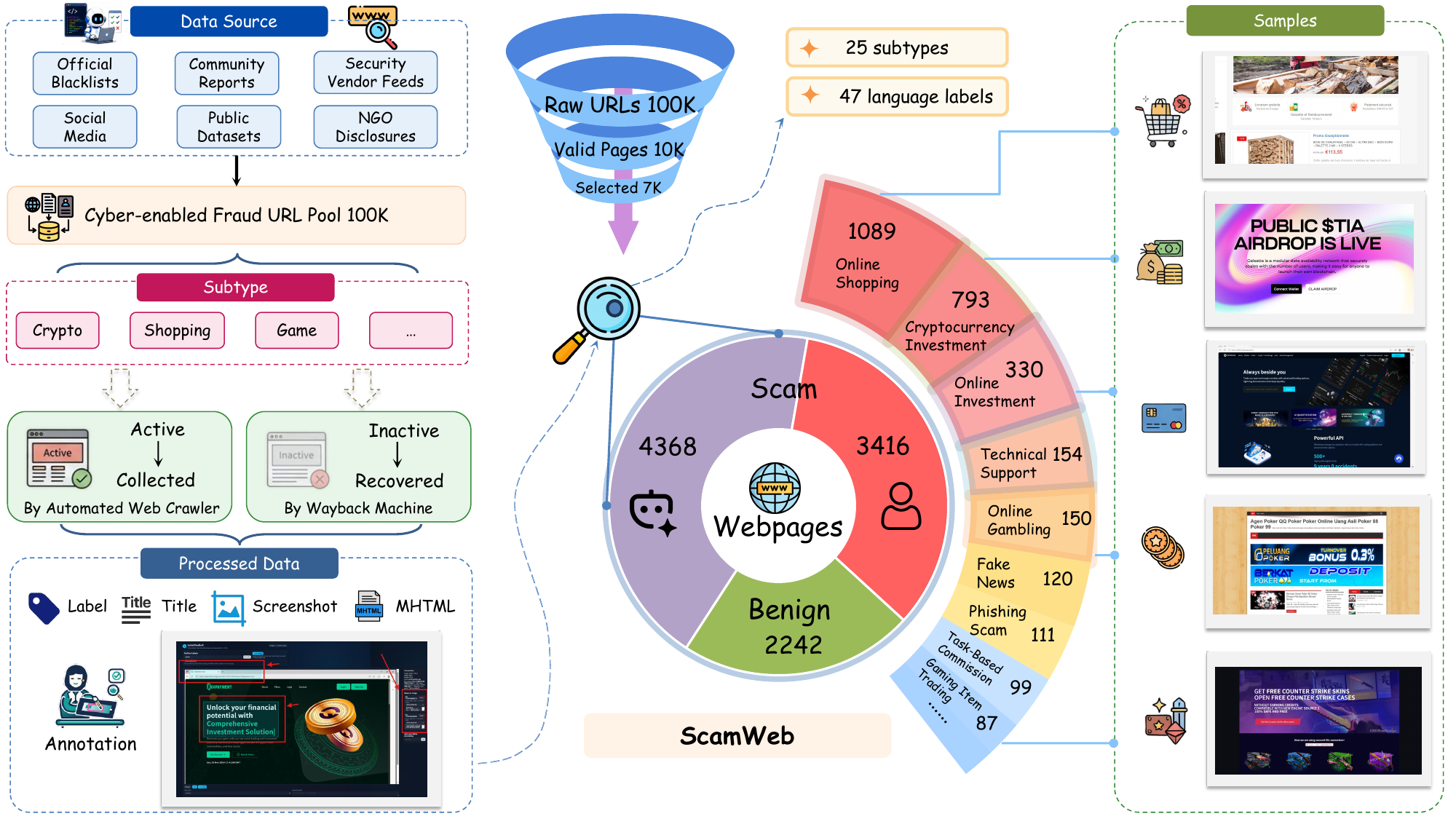
- Co-developed ScamWeb, a multimodal and multilingual benchmark containing more than 10,000 curated webpages across 25 cyber-enabled fraud subtypes, including 3,416 expert-annotated fraudulent webpages with evidence regions and human-written rationales.
- Contributed to data collection and cleaning, fraud taxonomy and expert annotation protocol design, the ScamDet multimodal pipeline and prompts, evaluation metrics, full-scale experiments, manuscript writing, result analysis, and project implementation.
- The completed work, ScamWeb: A Multimodal Benchmark for Grounded Understanding of Cyber-enabled Fraud Webpages, has been submitted to AAAI 2027.
Mar 2026 - Jun 2026
Research Intern, XSafeClaw Agent Runtime Safety
Institute of Trustworthy Embodied Artificial Intelligence (TEAI), Fudan University
- Worked on XSafeClaw, an open-source safety platform for local and multi-runtime agent systems, at TEAI, Fudan University.
- Worked under the guidance of Advisor Xingjun Ma, a Young Researcher and doctoral supervisor at Fudan University.
- Implemented runtime integration for nanobot-style local agent sessions, including session discovery, controlled tool calls, and unified platform display.
- Contributed to risk control workflows, validation, and documentation for explainable agent governance.
Jan 2026 - Mar 2026
Research Intern, VulnSeeker
Fudan Software Engineering (CodeWisdom) Lab
- Conducted research at the Fudan Software Engineering (CodeWisdom) Lab, focusing on automated security analysis for generated and repository code.
- Worked under the guidance of Lecturer Yi Li and collaborated with Qicai Chen, a Ph.D. student, on literature review, workflow design, and experimental validation.
- Built a CodeQL-assisted vulnerability analysis workflow that combines static analysis, code context expansion, and LLM-based security judgement.
- Designed prompt workflows for CodeQL and LLM interaction, including structured status codes for vulnerability triage and post-generation security inspection.
Jan 2026 - Apr 2026
International Organization Internship, UNDP-administered UNV Online Research Intern
Morobe Development Foundation Inc., Papua New Guinea
- Completed an International Organization Internship through the UNDP-administered United Nations Volunteers (UNV) platform, supporting research on mangrove responses to climate change scenarios and blue carbon mitigation.
- The United Nations Volunteers (UNV) programme is administered by the United Nations Development Programme (UNDP).
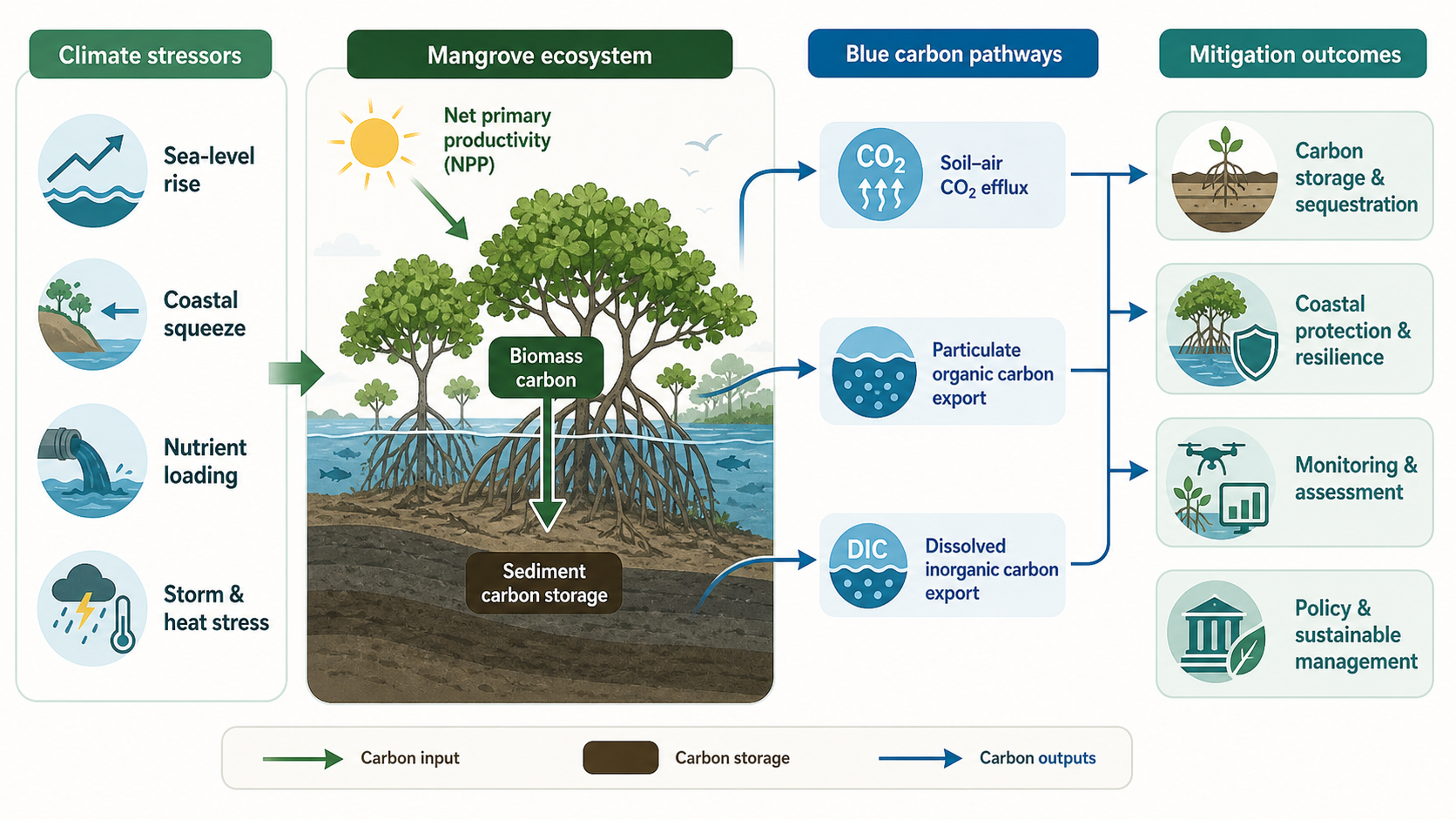
- Synthesized literature on sea-level rise, coastal squeeze, nutrient loading, carbon sequestration, and national climate policy.
- Produced a review manuscript titled Research Support in Analysing Mangrove Responses to Climate Change: The Interplay of Anthropogenic Impacts and Blue Carbon Mitigation.
Feb 2026 - Present
First-author Research, SafeCodeRL
Independent research collaboration
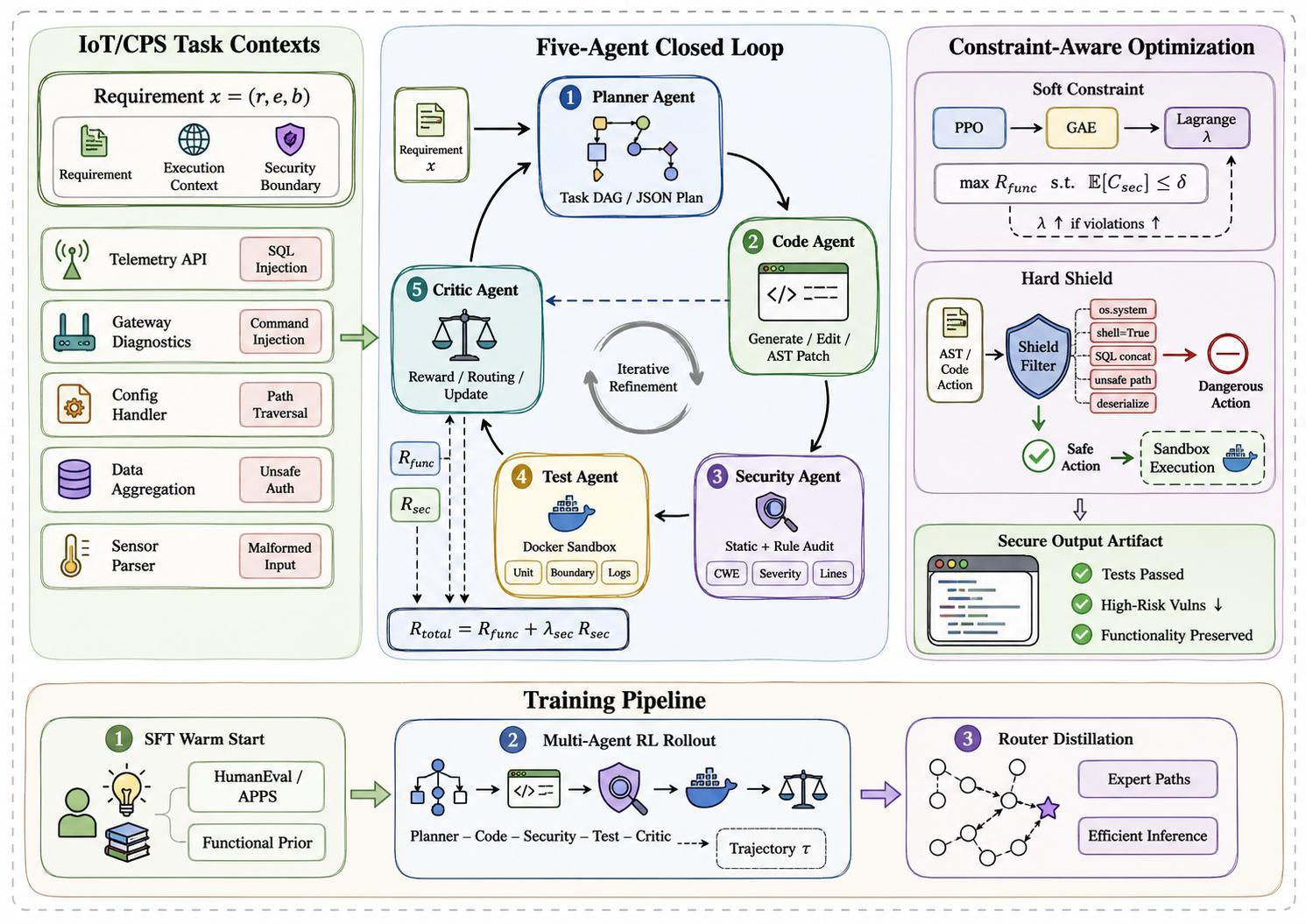
- Proposed SafeCodeRL, a multi-agent framework for dynamic safety constraints in LLM code generation.
- Designed a closed-loop collaboration workflow across five agents and a PPO-style constraint-aware policy.
- Reported a large reduction in high-risk vulnerable code generation while preserving functional correctness in the manuscript.
Sep 2025 - Mar 2026
Research Intern, SFMambaNet
Fujian Key Laboratory of Network Computing and Intelligent Information Processing, Fuzhou University
- Worked as a research intern at Fujian Key Laboratory of Network Computing and Intelligent Information Processing, Fuzhou University, from September 2025 to March 2026.
- Worked closely with Advisor Yizhang Liu, a university-appointed Associate Research Fellow and graduate supervisor, on robust two-view correspondence pruning.
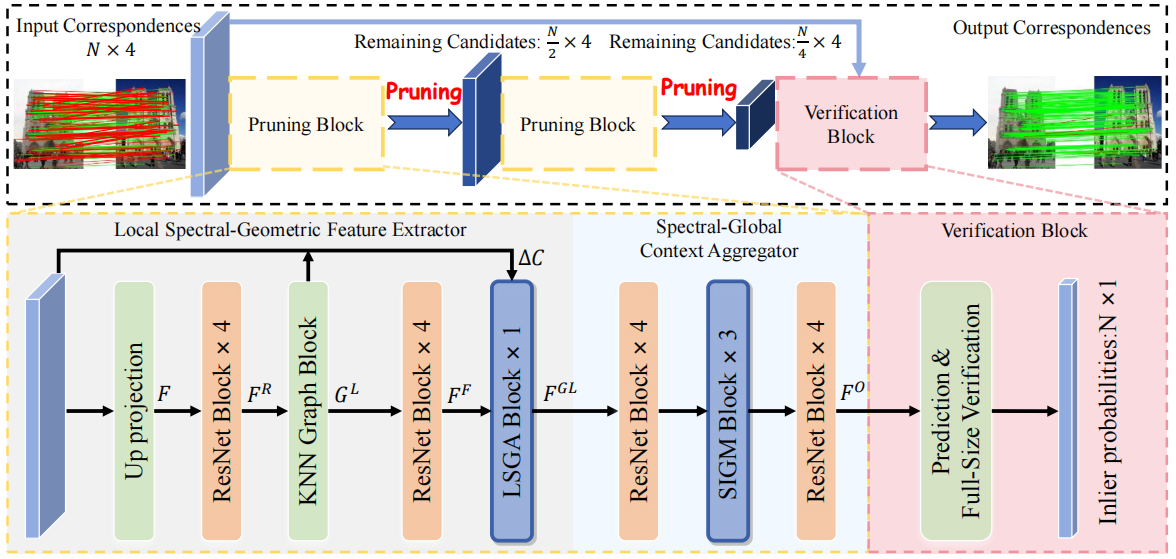
- This work led to our manuscript SFMambaNet: Spectral-Frequency Enhanced Selective State Space Model for Correspondence Pruning, currently under review at IEEE Transactions on Image Processing (TIP) and available as an arXiv preprint.
May 2024 - Jul 2025
ACMer, ACM Programming Training Team
University of Shanghai for Science and Technology
- Completed systematic training in algorithms, data structures, and contest problem solving.
- Earned a National First Prize in the 2025 RAICOM Robot Developer Competition, a Silver Award at the 2025 CCPC Shanghai Collegiate Programming Contest, and a National Second Prize in the 2025 LanQiao Cup C/C++ competition.
Research output
Selected Publications and Manuscripts
ScamWeb: A Multimodal Benchmark for Grounded Understanding of Cyber-enabled Fraud Webpages
Co-first author · Under review at AAAI 2027 · 2026
SafeCodeRL: A Multi-Agent Reinforcement Learning Framework for Safety-Constrained LLM Code Generation
First author · Published on June 2, 2026 · 2026
SFMambaNet: Spectral-Frequency Enhanced Selective State Space Model for Correspondence Pruning
First author · arXiv preprint; under review at IEEE Transactions on Image Processing (TIP) · 2026
Research Support in Analysing Mangrove Responses to Climate Change: The Interplay of Anthropogenic Impacts and Blue Carbon Mitigation
Author · review manuscript · 2026
Live Open Source Signal
GitHub Commit Activity
Last 12 months
Loading public contribution graph...Syncing
Live contributions are fetched from a public GitHub contribution API and may be cached.
Builds and artifacts
Featured Projects
2026 Featured
International Organization Internship: UNDP-administered UNV Mangrove Research
A UNDP-administered UNV research internship output on sea-level rise, nutrient loading, coastal squeeze, and blue carbon mitigation.
2026 Featured
XSafeClaw: Agent Runtime Safety Governance
An open-source agent safety platform for runtime session discovery, controlled tool calls, human approval, and risk auditing.
2026 Featured
SafeCodeRL: Safety-Constrained LLM Code Generation
A multi-agent reinforcement learning framework for dynamic security constraints in LLM code generation.
2026 Featured
VulnSeeker: CodeQL and LLM Security Analysis
An automated security analysis pipeline developed at the Fudan Software Engineering (CodeWisdom) Lab, combining CodeQL static analysis and LLM-based vulnerability judgement.
Knowledge progress
Learning Map
AI Safety and LLM Agents
88%Focused on agent runtime governance, safety-constrained code generation, tool-call auditing, and human-in-the-loop risk control.
Software Security and Program Analysis
84%Built workflows around CodeQL, LLM-assisted vulnerability judgement, code context expansion, and post-generation security inspection.
Deep Learning and Multimodal Intelligence
82%Studied neural architectures for visual correspondence, spectral-frequency modeling, state space models, and robust image watermarking.
Algorithms and Systems Programming
86%Maintains strong C/C++ foundations through algorithmic problem solving, contest-style implementation, and performance-conscious coding.
Scientific Writing and Research Methodology
80%Practices literature synthesis, experiment design, manuscript organization, and cross-domain research communication.
Web Engineering and Research Prototyping
78%Uses TypeScript, Python, Git, LaTeX, and static-site tooling to turn research ideas into reproducible public artifacts.
Signals
Awards and Skills
Selected Honors
- National First Prize, National Finals of the 9th National College Student Embedded Chip and System Design Competition — Aug 13, 2026
- National First Prize, RAICOM Robot Developer Competition, 2025
- National Second Prize, LanQiao Cup C/C++ Programming Contest, 2025
- Silver Award, CCPC Shanghai Collegiate Programming Contest, 2025
- National Encouragement Scholarship, Three-time Recipient
- National Third Prize, National English Competition for College Students, 2025
- Shanghai First Prize, National College Student Mathematics Competition, 2024
- First-author software copyright for a robust deep-learning watermark mobile application
Skills
Research
Programming
Tools
Language
Timeline
Work Experience
Apr 2026 - Present
The Third Research Institute of the Ministry of Public Security - Cybersecurity Center (Shanghai), Research Engineer (Online)
Jan 2026 - Apr 2026
International Organization (United Nations Volunteers) - UNDP, Research Intern (Online)
Jun 2023 - Sep 2023
Meituan, Odd Jobs
Academic community
Services
Reviewer, NeurIPS 2026
Contributing to rigorous peer evaluation for research in machine learning and artificial intelligence.